
If you're considering an interior designer for an upcoming refurbishment and have never worked with one before, we appreciate it can feel a little daunting. You'll also want to understand the return on your investment. Here is our guide to what to consider.
Our first and biggest piece of advice: hire a restaurant interior designer with proven hospitality experience. Look for someone who understands covers and flow before colour, designs around your brand rather than their own style, and can explain how the space will pay back its investment. Ask to see completed food and beverage projects, and agree scope, fees and responsibilities in writing before you sign.
What experience should a restaurant interior designer have?
A hospitality project in a portfolio is a good start. It is not the same as hospitality experience.
What you are really looking for is someone who understands the operation behind the room. How a Friday night service actually runs. Where staff get caught in each other's way. Why the table by the door never gets booked. What happens to a pale velvet banquette after six months of red wine and Sunday roasts.
That knowledge usually comes from one of two places: years of designing restaurants, or years of working in them. The best hospitality designers have often done both.
What to look for:
- References from operators, not just homeowners
- Completed food and beverage projects they can talk through in detail, including what they would do differently
- An understanding of durability, cleaning and maintenance, not just finish and colour
- Fluency in the language of your business: covers, spend per head, dwell time, table turns
How should a restaurant designer approach layout, covers and flow?
In a restaurant, layout is revenue. Every table that does not fit, every awkward corner nobody wants to sit in, every pinch point between the pass and the floor has a cost.
A good restaurant designer will ask how many covers you need before they ask what colours you like. They will want to understand your service style, your peak times and your table mix. Twos, fours, larger groups, bar seating.
They should be thinking about three journeys at once:
- The guest's journey. From the front door to the table, to the loos, and back out again. It should feel natural and unhurried.
- The staff journey. From kitchen to table, bar to table, and clearing back. Short, clear routes protect service on your busiest nights.
- The room's journey through the day. Does the space need to work for a quiet lunch and a full Saturday night? Can it flex for private hire?
If a designer presents a beautiful scheme without a considered floor plan underneath it, treat that as a warning sign.
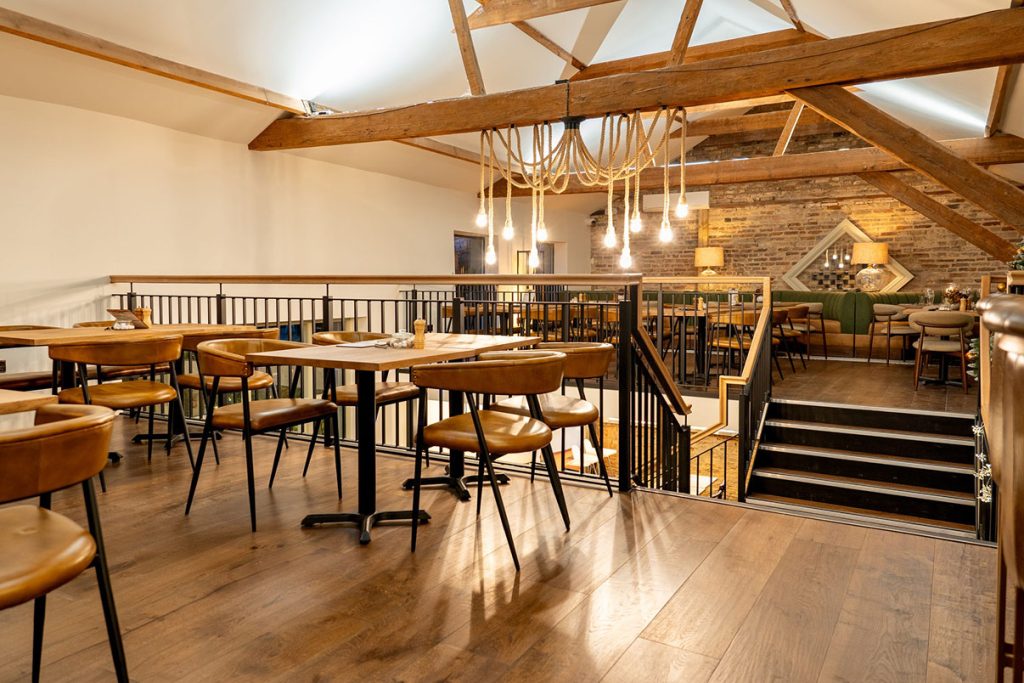
You can see this at LOT 25 in Willingham, near Cambridge. A historic barn had to work as a café by day, a restaurant by night and an events venue in between. We started with circulation, rethinking how staff and guests move through the building before choosing a single finish.
Bespoke booth seating gives the room intimacy and a dependable table layout. A split staircase, made by British craftspeople, connects a new mezzanine level and became the venue's focal point. Function first, and the drama follows.
How do you know a designer will get your restaurant's brand right?
Some designers have a look. You can spot their work from across the street. That is wonderful if their look happens to be your brand. It is a problem if it isn't.
Your restaurant's interior should feel like an extension of your food, your service and your price point. A neighbourhood bistro, a destination tasting menu and a busy family pub kitchen need very different rooms, even if they share a postcode.
The right designer starts by understanding who your guests are and why they choose you. Then they translate that into materials, lighting, colour and layout.
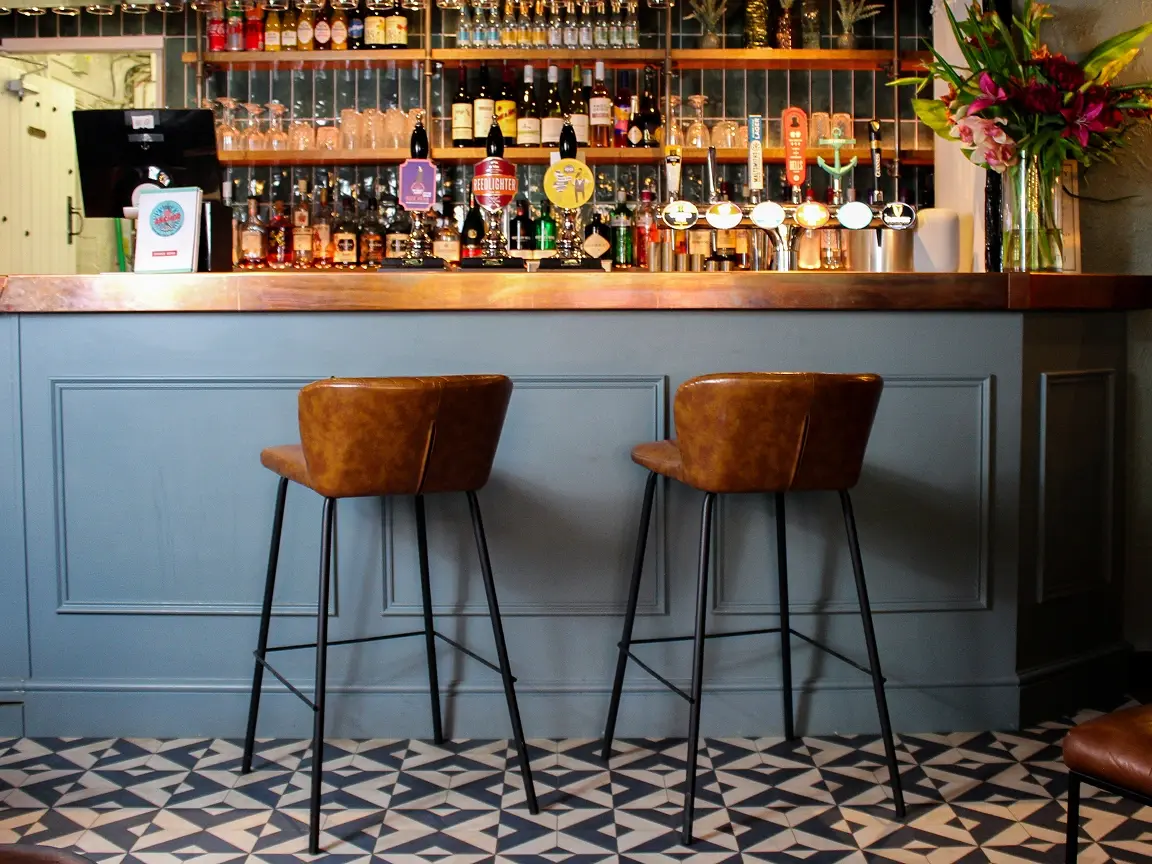
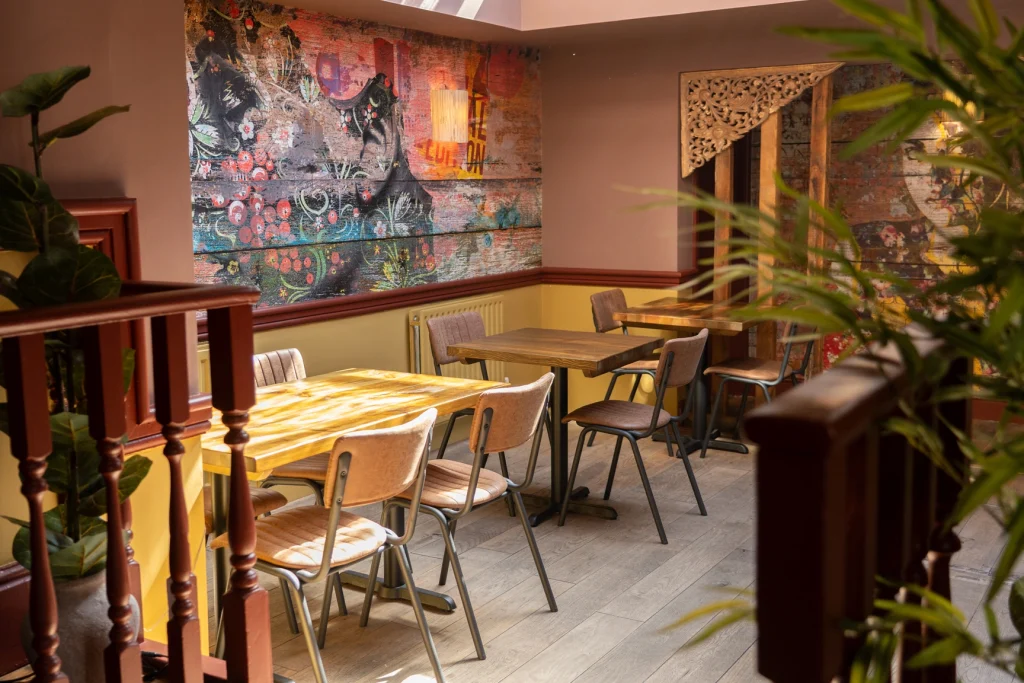
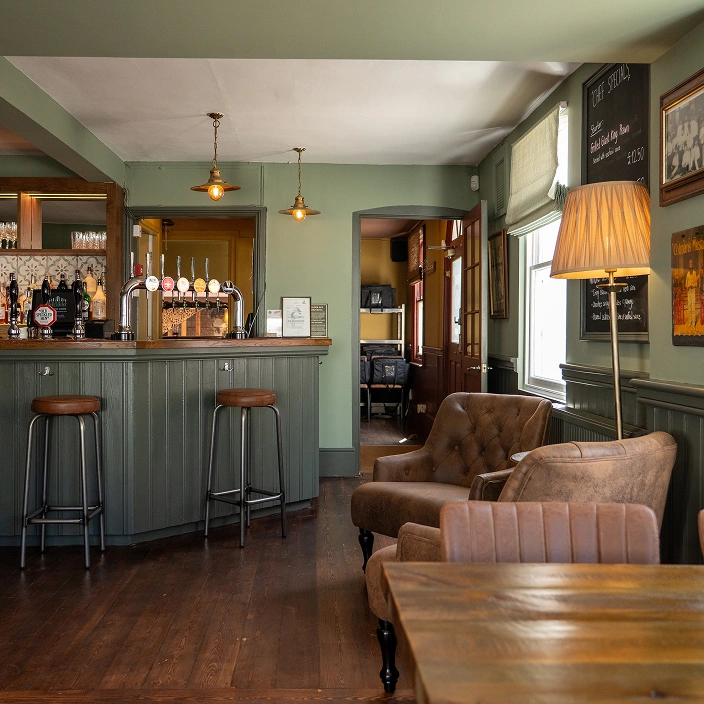
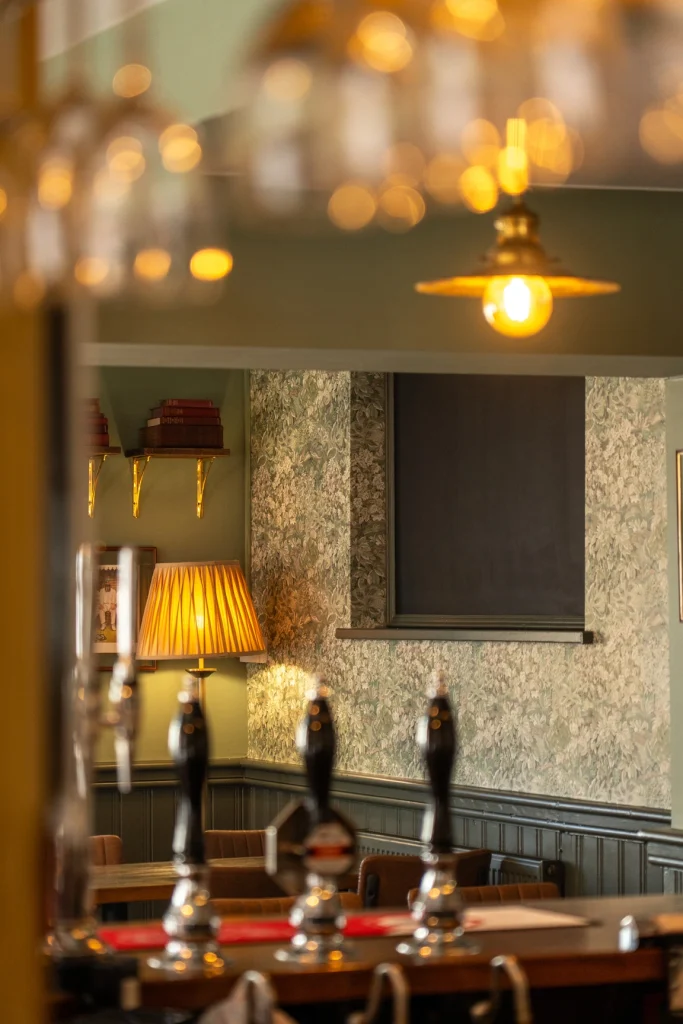
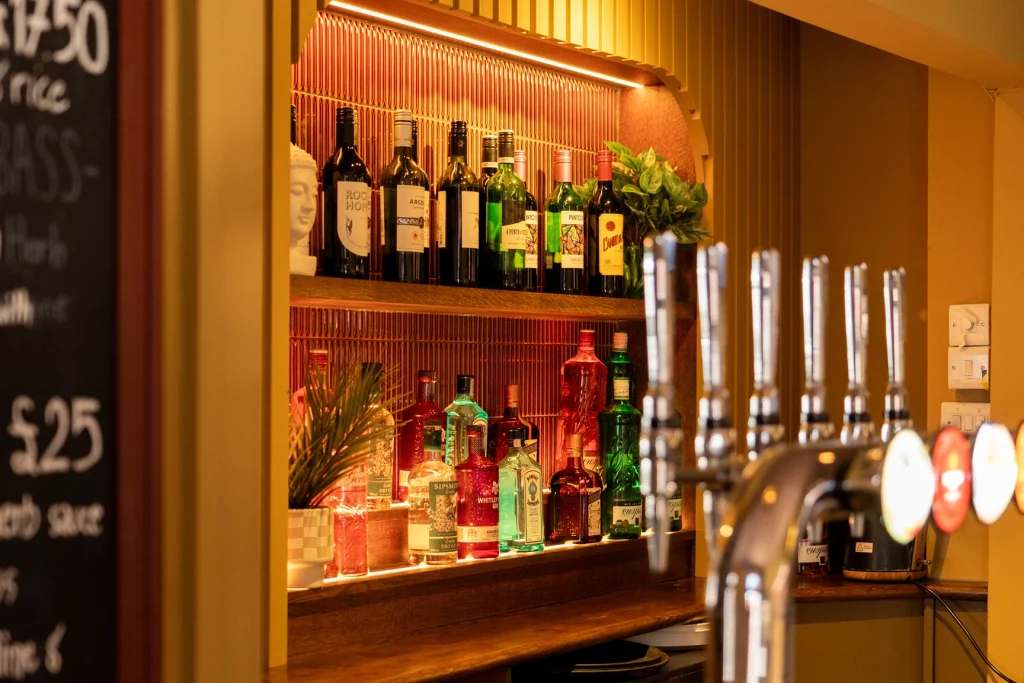
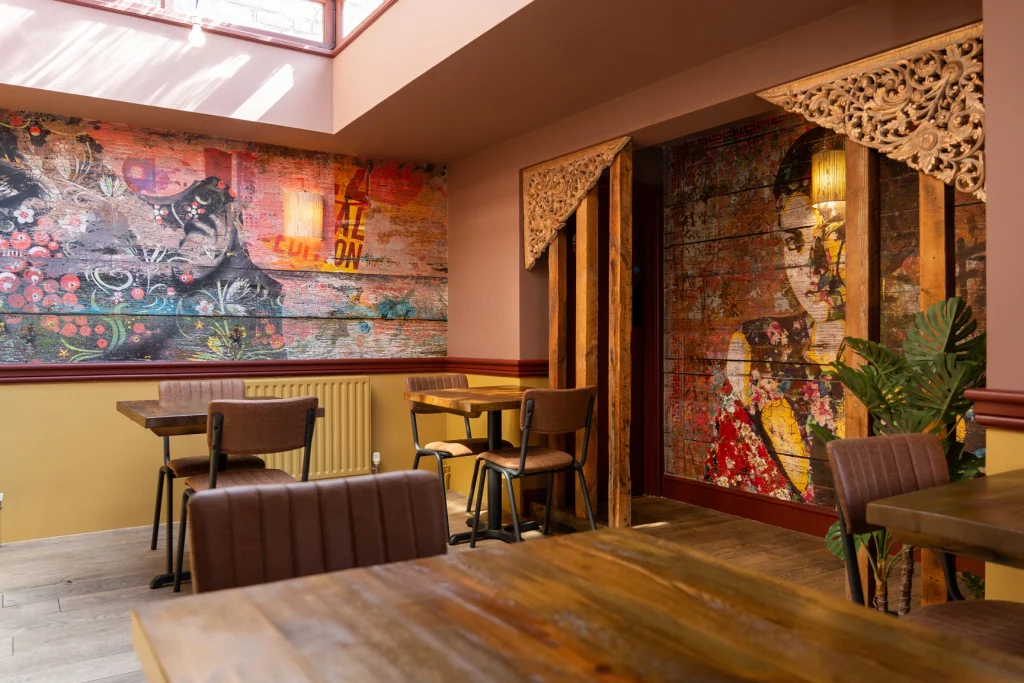
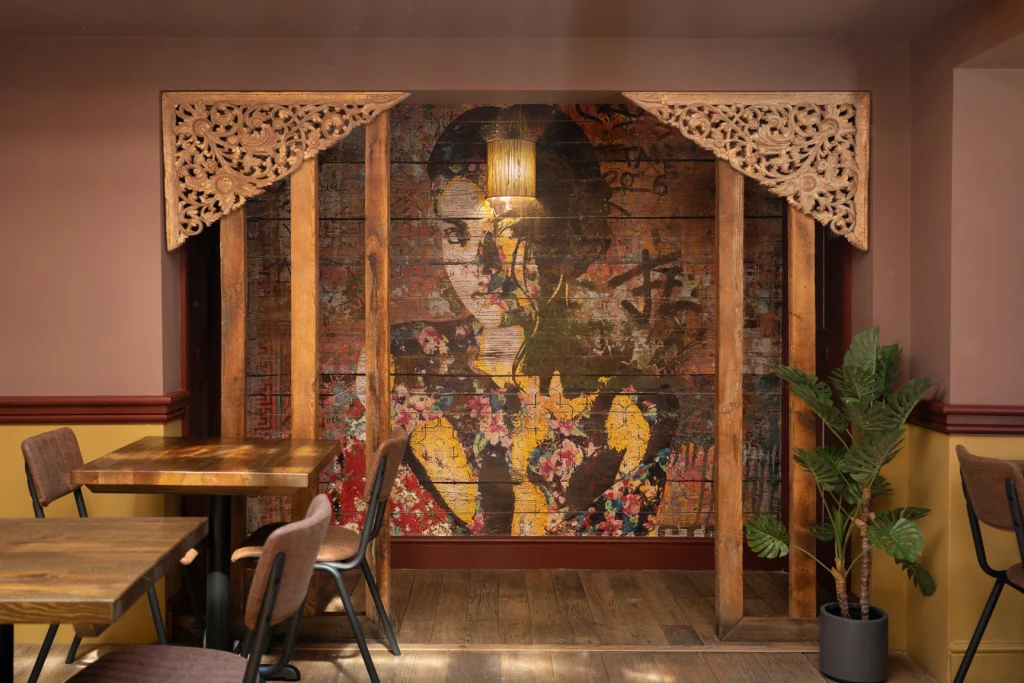
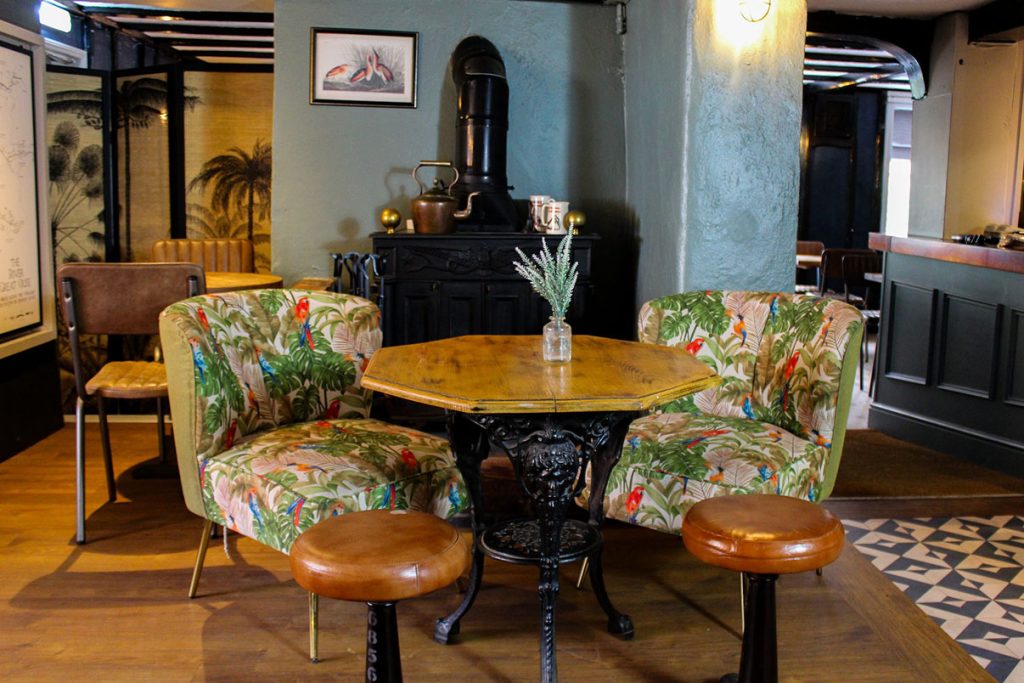
At The Cricketers in Cambridge, a much-loved pub serving authentic Thai food, the brief was two spaces under one roof. The front bar leans into a proper English pub: deep greens, patterned wallpaper, leather seating and dark timber. The dining room at the back takes a softer direction, with warm mustard, dusky pink and bamboo-inspired tiles. It nods to the Thai menu without tipping into theme.
Two moods. One venue. Both unmistakably The Cricketers.
What commercial results should restaurant interior design deliver?
A restaurant interior is an investment, and it should be judged like one.
The question is not just does it look good? It is: will more people book? Will they stay for dessert and another bottle? Will they come back, and bring friends? Will the room photograph well enough that guests do your marketing for you?
A designer who leads with function will talk to you about these outcomes from the first conversation. They will help you decide where your budget works hardest, and where it doesn't need to go at all. Lighting and seating comfort, for example, often do more for dwell time than an expensive statement wall.
At The Cricketers, the measure of success was simple. Since the refurbishment, the owners have been turning away Deliveroo orders on busy evenings because the restaurant was full. As owner Joe Baron put it:
"The feedback from customers has been incredibly positive, with so many commenting on how much more welcoming and cohesive the pub and restaurant now feel."
That is the kind of result worth asking a designer about.
Design-only or full service: which does your restaurant need?
Not every restaurant needs, or can justify, a full-service fit-out with a designer managing every contractor and delivery. Many independent operators are better served by something more focused.
It helps to understand the main options before you start speaking to studios:
| Service | What you get | Best for |
|---|---|---|
| Consultation | A focused session to sense-check a plan or unblock a decision | Small refreshes, or owners who need direction before committing |
| Design-only | A full design pack: concept, layout, materials, colour, bar design and FF&E direction. You manage procurement and trades | Hands-on owners who want professional direction and control of spend |
| Full service | Design plus specification, procurement and project management through to opening | New openings, larger refurbishments, or owners with no time to manage the build |
The Cricketers was delivered on a design-only basis. A structured design pack guided every decision, so the owners could manage procurement with their own team and keep spend where it mattered most. Low investment, high impact.
The Anchor in Cambridge, another traditional pub with a Thai kitchen, needed the opposite. We delivered the full design package and managed the project from build through to final styling, coordinating contractors and trades so every stage ran to schedule. The brief was to modernise without losing the regulars, and to make the room work properly around a busy kitchen.
Same thinking, different delivery. The right model depends on your time, your team and how much of the build you want to manage yourself. Our hospitality interior design service offers both.
Whichever route you choose, be clear about it in writing before work begins.
What should you ask a restaurant interior designer before signing?
Take these into every initial conversation. The answers will tell you far more than a portfolio ever will.
Experience
- Which food and beverage venues have you designed, and can I speak to the owners?
- Have you ever worked in hospitality yourself?
- What would you do differently on your last restaurant project?
Layout and operation
- How will you approach covers, table mix and staff flow?
- Will you work with my kitchen and bar layout, or alongside a kitchen designer?
- How do you design for durability, cleaning and heavy daily use?
Brand and guests
- How will you get to know my brand, menu and typical guest?
- Can you show me a project where the design looks nothing like your other work?
Commercial outcomes
- Where would you prioritise spend in my space, and where would you save?
- How will this design help guests stay longer, spend more and come back?
Scope, fees and contract
- Exactly what is included in your fee, and what isn't?
- How many revision rounds are included?
- Is your fee fixed, a percentage of budget, or a day rate?
- Who manages procurement, contractors and the programme?
- How do you work around trading? Can we stay open during the works?
- What drawings and specifications will I receive, and will my contractors be able to build from them?
- Are you accredited by a professional body, such as SBID, and do you hold professional indemnity insurance?
If a designer is vague on any of these, ask again. If they are still vague, keep looking.
Frequently asked questions
How much does a restaurant interior designer cost?
It depends on the size of the venue and the scope of work. Designers usually charge a fixed fee, a day rate or a percentage of the project budget. A design-only service costs less than full service, because you manage procurement and contractors yourself. Ask for a written proposal that sets out exactly what is included.
How long does a restaurant refurbishment take?
It varies with scope. A cosmetic refresh moves far faster than a full refit with new layouts, joinery or kitchen works. Long-lead items such as bespoke joinery and upholstery often set the pace, so a good designer will give you a realistic programme at the start.
Can a restaurant stay open during a refurbishment?
Often, yes, if the works are phased. Closing one area at a time, or working around quieter trading periods, can keep revenue coming in. Raise this early so your designer can plan for it.
Do I need an interior designer or an architect for my restaurant?
An architect leads on structural changes, extensions and planning applications. An interior designer focuses on layout, atmosphere, materials, lighting, furniture and how the space works for guests and staff. Many restaurant refurbishments need only an interior designer; larger projects may need both working together.
Should a restaurant interior designer be accredited?
There is no legal requirement, but accreditation from a professional body such as SBID shows a designer meets recognised standards of practice. Check they hold professional indemnity insurance too.
So, which interior designer should you hire?
The one who asks about your covers before your colour palette. The one who can explain how the room will work on your busiest night, not just how it will look on Instagram. The one whose definition of success matches yours.
That is the thinking behind how we work at Styled. Our founder, Natasha King, spent over a decade in senior hospitality roles at Greene King and Punch Pubs & Co, moving from marketing into Head of Guest Experience, before designing for it. So we start with function: how guests move, how staff serve, and where the money is made. The aesthetics follow from that, and they are better for it.
You can see more of this approach on our hospitality interior design page, from LOT 25 to The Anchor. If you are planning a restaurant opening or refurbishment and would like a second opinion, get in touch. We are always happy to talk it through.
Styled is an SBID-accredited interior design studio based in Cambridge, working with independent restaurants, pubs and hospitality venues across Cambridge, Cambridgeshire and the UK.
About the author
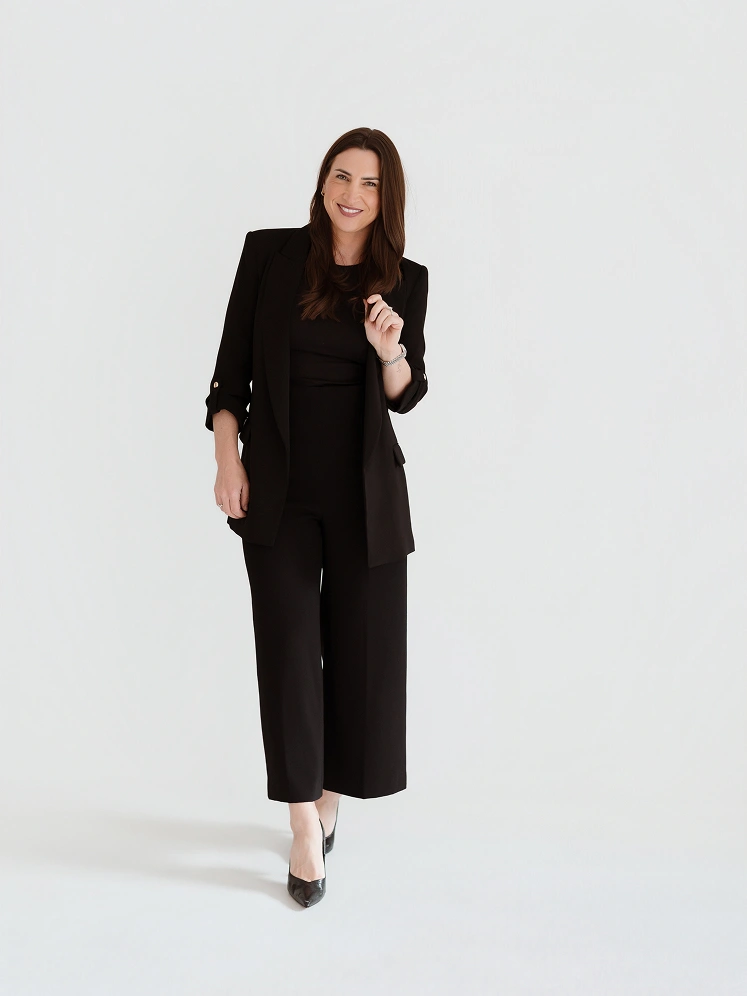
Natasha King is the founder of Styled, an SBID-accredited interior design studio based in Cambridge. Before founding Styled in 2022, she spent over a decade in senior hospitality roles at Greene King and Punch Pubs & Co, moving from marketing into Head of Guest Experience. She holds a First Class BA in Business Management and a Diploma from the Interior Design Institute.