
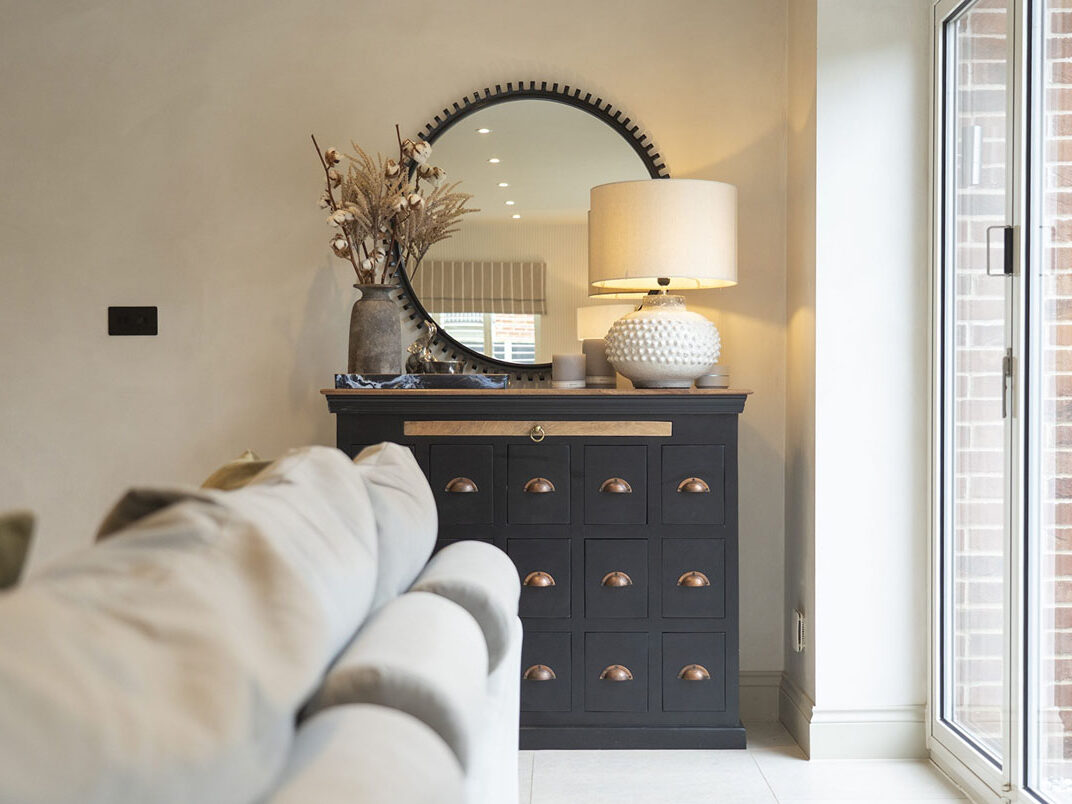

The clocks go back on Sunday 25 October. We gain an extra hour in bed, but we lose the light, and from next week most of us will be coming home in the dark.
It's the time of year we notice lighting more than any other. Most homes don't lack light. They rely on just one kind of it, the big ceiling light that goes on at 5pm and stays on until bedtime.
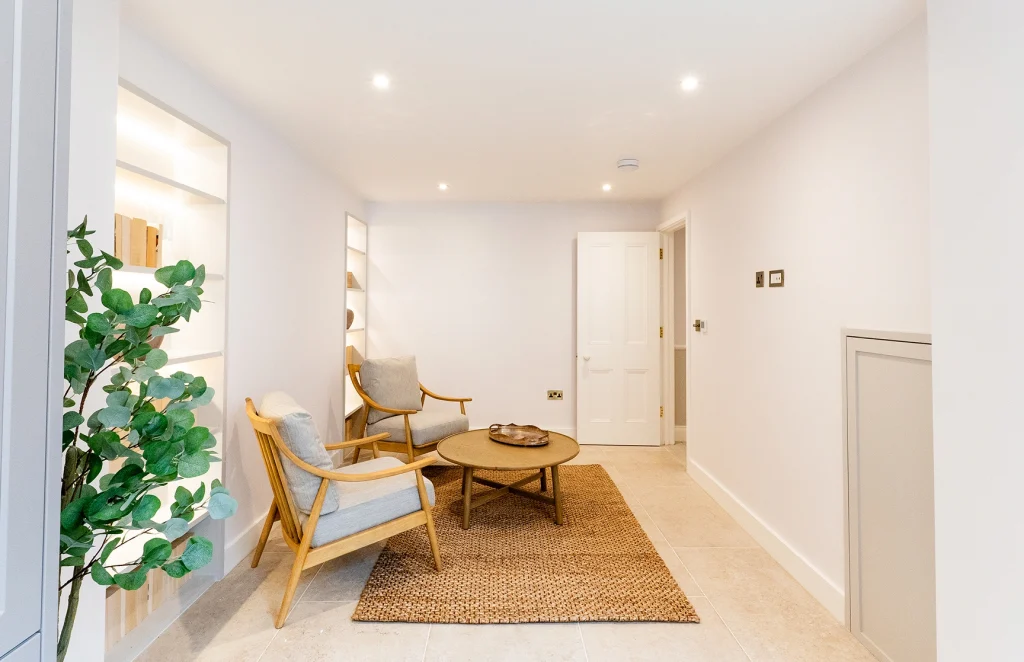
Before I launched Styled, I spent years working in the hospitality industry. One thing that has always stayed with me is how carefully good hotels are lit. You'll never walk into a luxury hotel lounge and find one overhead light doing all the work. Instead there are lamps, wall lights, hidden strips and soft pools of light that change the mood as the evening goes on.
That approach is called layered lighting, and it works just as well at home. Here's how to do it.
What is layered lighting?
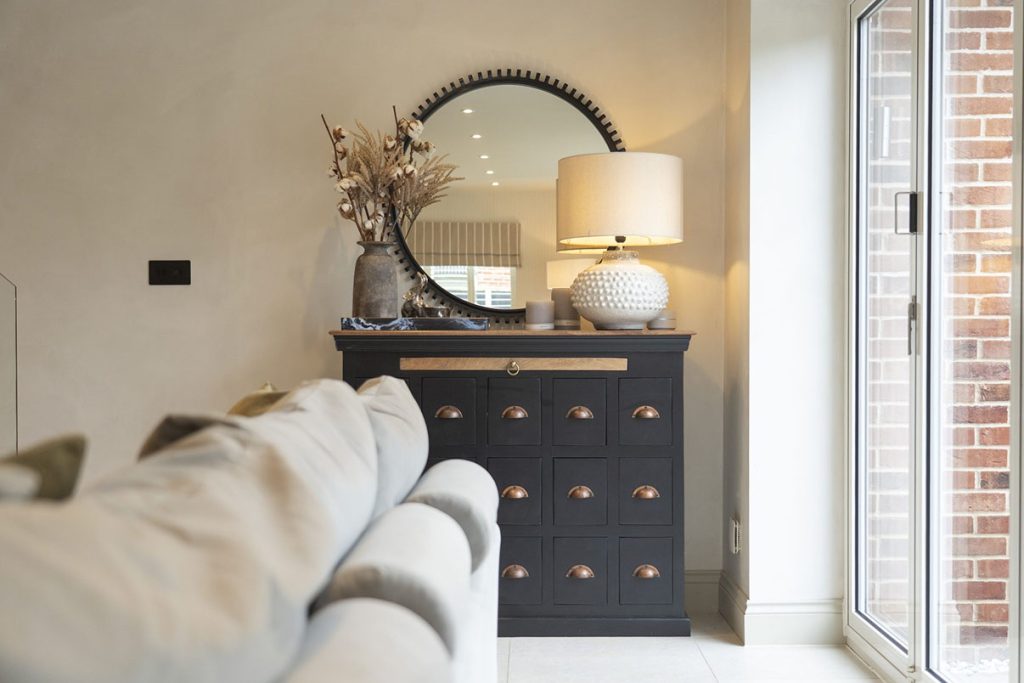
Layered lighting means using several light sources at different heights, each with its own job, instead of one fitting in the middle of the ceiling.
A single overhead light flattens a room. It casts shadows under your eyes, bleaches out colour and makes every corner look the same. Light from lower down and from several directions does the opposite. It adds depth, draws the eye to the things you love, and lets you change the feel of a room without touching the furniture.
There are four layers. Most homes have one or two. The best-lit rooms use all four.
The four layers of lighting
Layer One: Ambient Lighting
Ambient light is the general light that lets you move around a room safely. It usually comes from ceiling lights, downlights or a central pendant.
The mistake is running it at full brightness all evening. Put it on a dimmer and treat it as background, not the main event. Once your other layers are in, you'll find you barely need it after dark.
What to do:
- Fit dimmers to your main ceiling circuits. This is the single most useful lighting change you can make. Try this: Dimmer switch by Corston
- Consider wall lights or uplighters as an alternative source of ambient light. Light bounced off walls and ceilings feels softer than light pointed straight down. here's some of our favourite: Wall lights by Soho Lighting
- When renovating larger or open-plan rooms, consider wiring your ambient lighting in zones so you can light the kitchen without lighting the sofa.
Layer Two: Task Lighting
Task lighting is focused light for specific jobs, reading, cooking, working, applying make-up.
Darker evenings expose weak task lighting quickly. If you're reading by the glow of a ceiling pendant or chopping vegetables in your own shadow, this is the layer that's missing.
What to do:
- Place a reading lamp beside every chair or sofa end where someone actually sits. We love these: Cordless lamps by Pooky
- Add under-cabinet lighting in the kitchen. It lights the worktop, not the back of your head.
- If you're working from home, use a directional desk lamp positioned to the side of your screen, not behind it. This is a fabulous solution: Desk lamp by Pooky
- In bathrooms, light the face from the front or sides. Overhead spots alone cast unflattering shadows. Here's is a great example: Bathroom wall lights by Corston
Layer Three: Accent Lighting
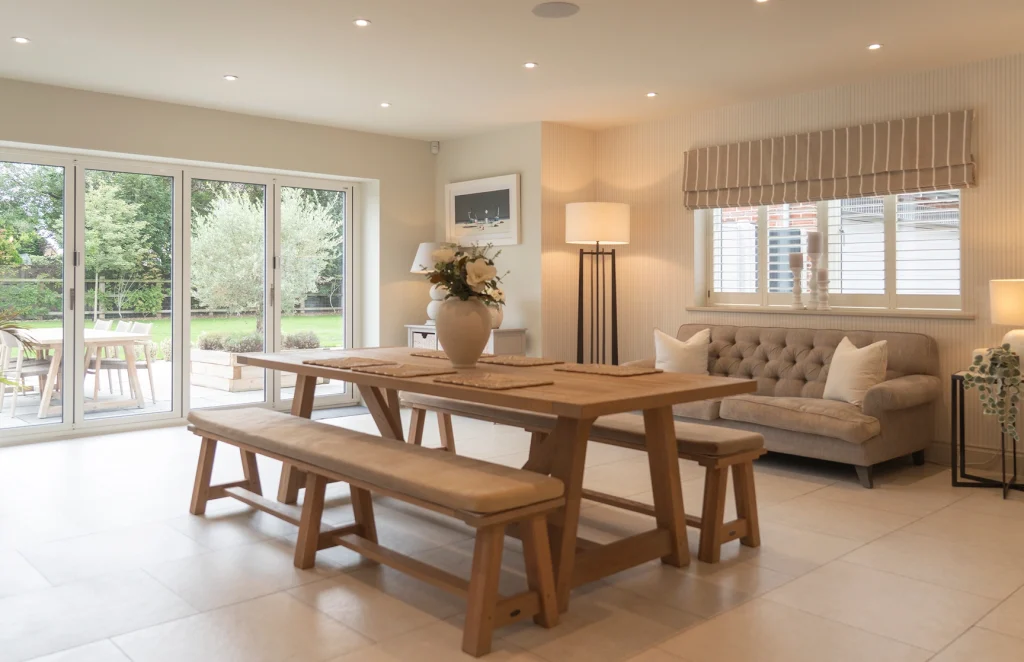
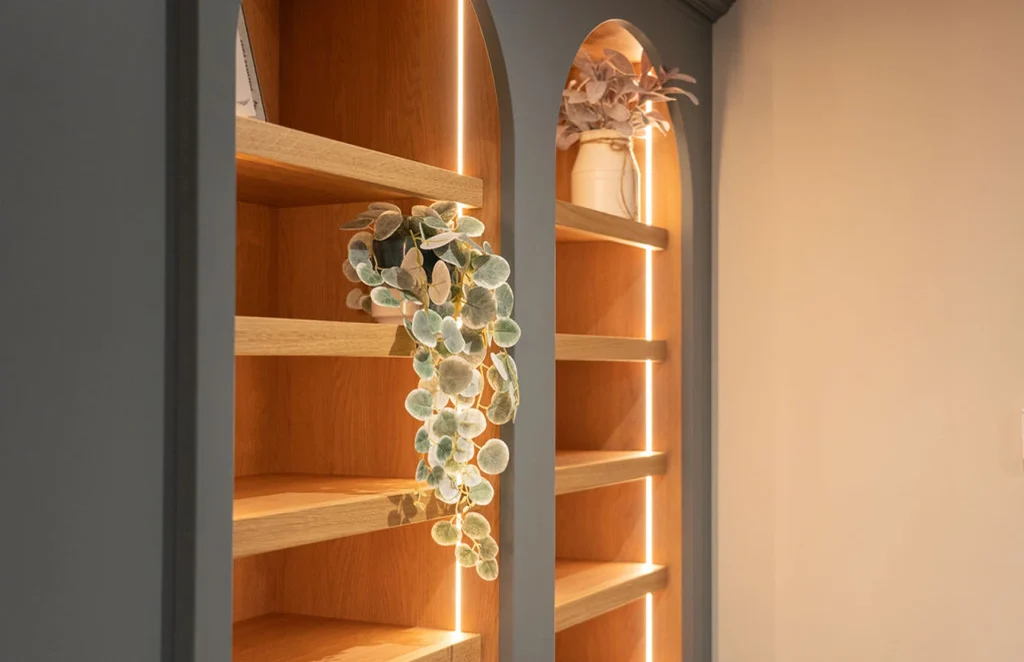
Accent lighting is where a room gets its atmosphere. It draws the eye to features you want noticed, artwork, shelving, a textured wall, an alcove, a plant.
This is the layer most homes skip, and the one that makes the biggest difference to how a room feels after dark.
What to do:
- Use picture lights or a small adjustable spotlight to pick out a favourite piece of art. No hard wiring? try these: Rechargeable picture lights by Pooky
- Add LED strips to the back edge of shelving or joinery to give depth.
- Put a small lamp in an unexpected spot, like a bookcase shelf, a hallway console or a deep windowsill. No free sockets? Try these: Cordless lamps by Pooky
- Keep it subtle. Accent light should be roughly three times brighter than the surrounding ambient light, not a spotlight on a stage.
Layer Four: Decorative Lighting
Decorative lighting is the fitting you look at rather than the light it gives. A sculptural pendant, a statement table lamp, candles. This is a favourite: Pendant light by OKA
It adds personality, but it isn't a substitute for the other layers. A beautiful pendant that throws harsh light is still a harsh light.
Getting the colour of light right
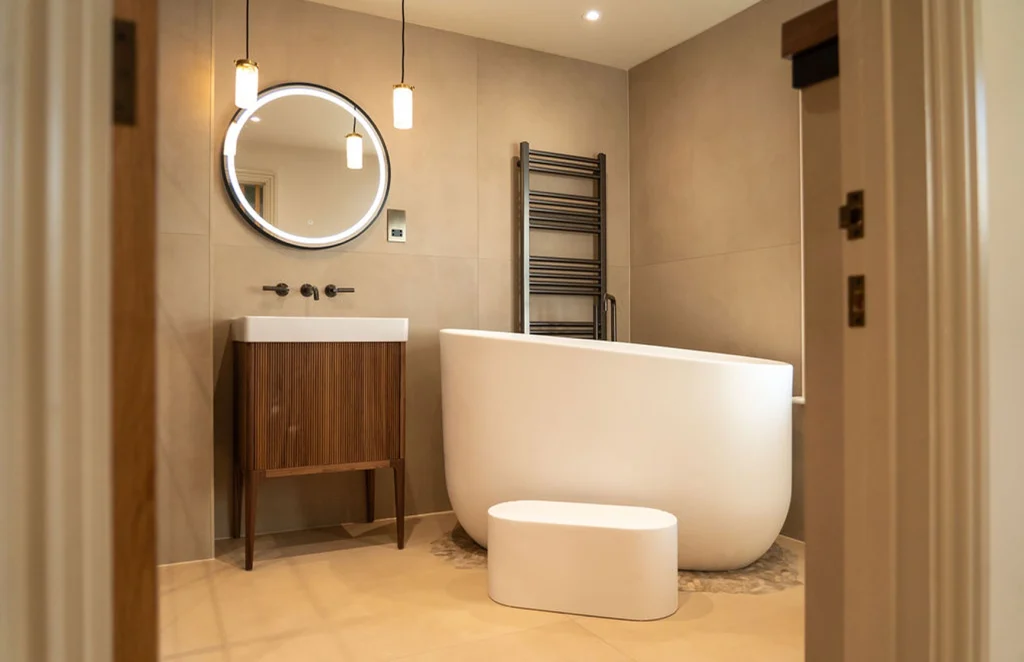
The warmth of your bulbs matters as much as where they go. Colour temperature is measured in Kelvin (K).
- 2700K is warm white and best for living rooms and bedrooms in the evening.
- 3000K is slightly crisper and works well in kitchens and bathrooms.
- 4000K and above is cool white. It's better suited to garages and utility spaces than anywhere you want to relax.
Mixing colour temperatures in one room is one of the most common mistakes we see. Pick one and stick to it within each space.
It's also worth checking the CRI (colour rendering index) on the packaging. Aim for 90 or above. It means colours, fabrics and skin tones look as they should, rather than slightly grey
Think in scenes, not switches
Once your layers are in place, stop thinking about individual lights and start thinking about scenes.
Early evening: ambient on around 70%, task lights where needed, accent lights on.
Later on: ambient dimmed low or off, lamps and accent lighting doing the work.
Late night: a single low lamp or two. Enough to see by, no more.
Smart bulbs and plugs make this easy, but you don't need them. Lamps on a switched socket circuit, or simply a habit of turning the overhead light off after dinner, will get you most of the way there.
A quick checklist before 25 October
- Does every main room have at least three light sources?
- Are your ceiling lights dimmable?
- Is there a lamp beside every seat people actually use?
- Are all bulbs in each room the same colour temperature?
- Is there at least one accent light drawing the eye somewhere other than the ceiling?
If you're answering no to more than two of these, your evenings will feel it.
Where to start if you're not sure
Lighting is one of the hardest things to get right, and one of the easiest to overlook when planning a room. If you'd like a second pair of eyes on your space before the evenings draw in, our one-to-one Interior Design Consultation is designed for exactly this kind of question.