


Victorian bathroom design is one of the things I'm asked about most. Around Cambridge, so many of us live in Victorian and Edwardian homes, and their bathrooms rarely started life as bathrooms. Most are converted bedrooms or boxrooms, with high ceilings, sash windows, uneven walls and plumbing added decades after the house was built.
Done well, a period bathroom can be one of the most beautiful rooms in the house. In this post I'll share how I approach Victorian bathrooms, what my years in hospitality taught me about bathrooms that feel genuinely luxurious, and how to tell the difference between classy and tacky.
For more on layout, materials and cost, see our complete guide to luxury bathroom design.
Start with the house, not the brochure
The best Victorian bathrooms feel as though they belong to the house. That means starting with what's already there.
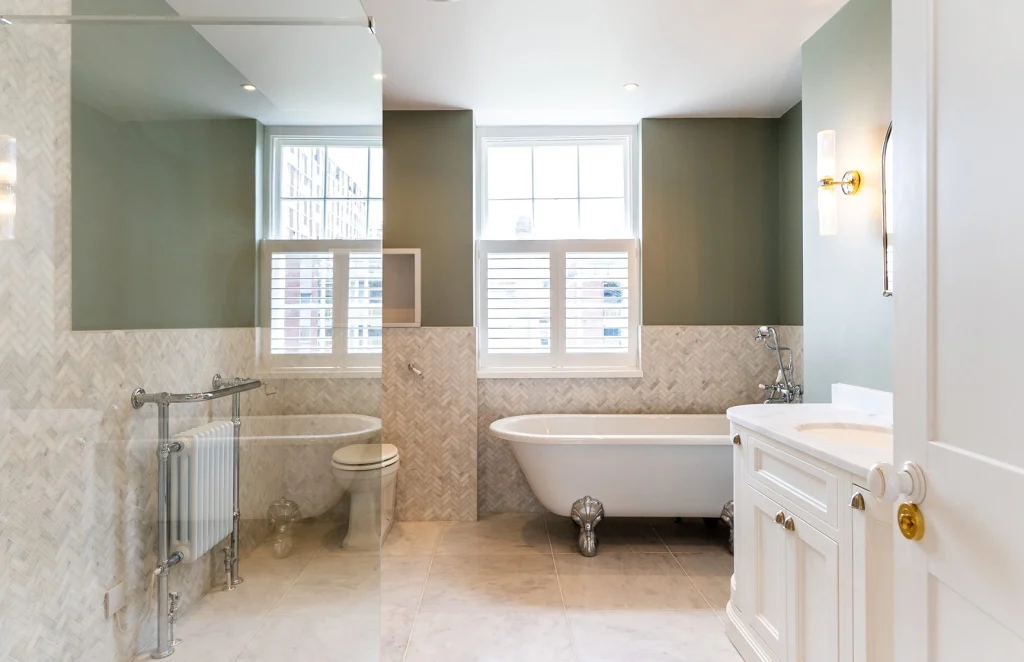
Keep original features where you can. Cornicing, ceiling roses, fireplaces, panelled doors and sash windows are part of what makes the room special. Plan the layout around them rather than boxing them in or removing them.
Work with the proportions. High ceilings and tall windows suit taller mirrors, wall lights set at a generous height and half-height tiling with paint above. Low, squat fittings can look lost in a tall room.
Fix the practical problems first. Older houses often need better ventilation, updated pipework and some levelling of walls and floors. Building that into the plan and budget at the start avoids nasty surprises once the room has been stripped out.
Choosing fittings for a period bathroom
You don't need reproductions to create a Victorian feel. Simple, well-made pieces with classic proportions usually look far better than ornate copies.
- Baths. A freestanding roll-top or slipper bath is the classic choice. Check the weight on older floors, especially with cast iron or stone resin, and leave room to clean around it.
- Basins. A washstand, a pedestal basin or a furniture-style vanity all suit a period room. Drawers are more practical than an open washstand if you need storage.
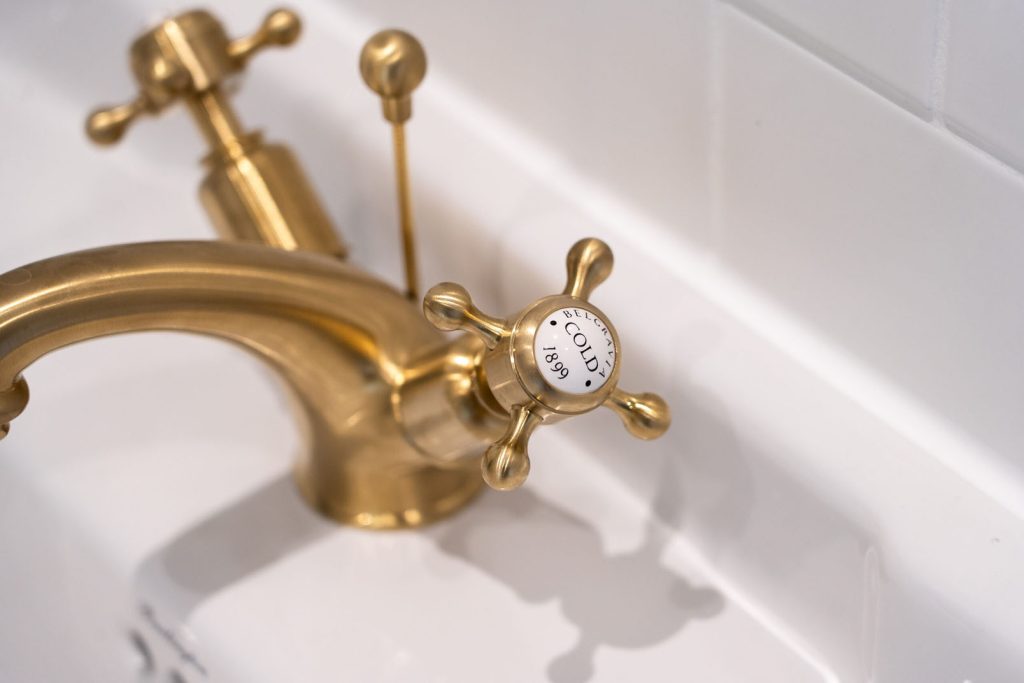
- Taps. Cross-head or lever taps in a warm finish such as brushed brass or nickel feel right in an older house. Choose one finish and use it throughout.
- WC. A traditional close-coupled or high-level cistern suits the style, but a simple modern WC is fine if it's well proportioned and doesn't draw the eye.
- Showers. A modern walk-in shower can sit happily in a Victorian bathroom if the materials link it to the rest of the room, for example a tiled dado height that carries through, or the same metal finish on every fitting.
Tiles, colour and materials
Half-height tiling is a classic Victorian approach and still one of the best. Tiles protect the walls where water splashes, and a painted wall above keeps the room soft and lets the ceiling height show. A bullnose or capping tile gives a beautifully finished edge.
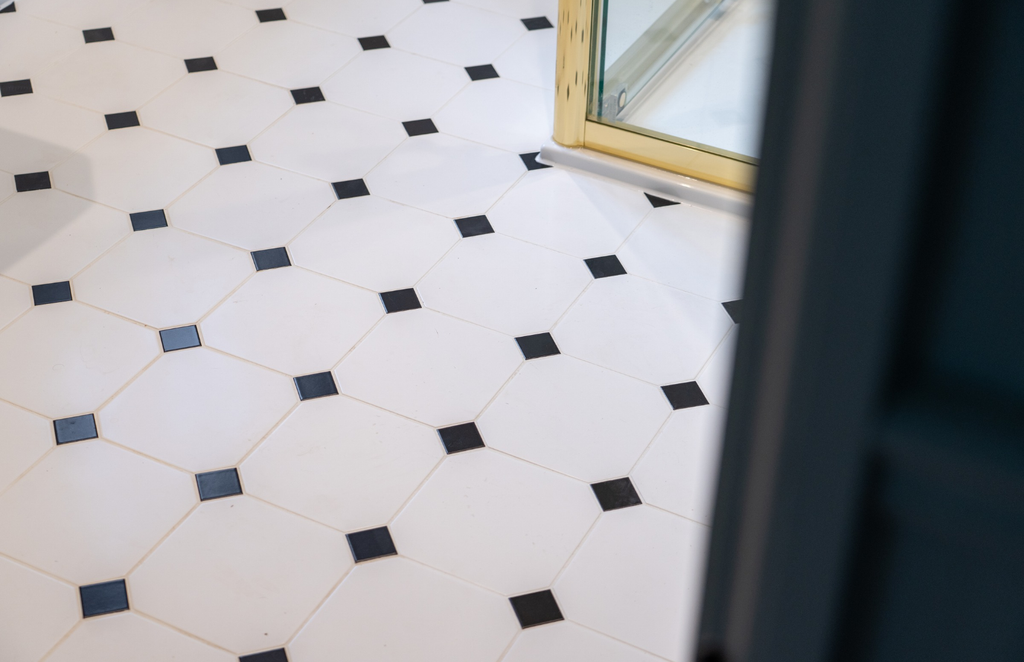
Floors suit pattern. Black and white mosaic, encaustic-style tiles or a simple checkerboard all nod to the age of the house without feeling like a costume.
Colour should be warm and slightly muted. Deep greens, plaster pinks, ochres and warm whites all suit period homes. For specific shades, read our post on choosing the right colour palette for your home.
What hotel and spa bathrooms get right
Before I started Styled, I spent years in hospitality, including guest experience roles at Greene King and Punch Pubs & Co. Good hotels taught me a lot about bathrooms. They're designed for people who are tired, unfamiliar with the room and want to feel looked after, and that's a useful brief for any home, period or not.
Everything has a place. Hotels plan exactly where you'll put down a phone, a wash bag or a glass. A shelf by the basin, a hook by the shower and a ledge by the bath make a room feel thought through.
Light changes with the time of day. The best hotel bathrooms have bright, even light for getting ready and a soft, low setting for the evening. In a Victorian bathroom, wall lights either side of the mirror and a separate low-level circuit can transform the room.
Warmth matters. Underfloor heating and a heated towel rail are small luxuries that change how a bathroom feels every day. They're especially welcome in older houses, which can be draughty.
Fewer materials, better quality. Hotels repeat a small number of durable finishes because they have to last. The same discipline gives a home bathroom a calm, finished look.
Styling is part of the design. Matching towels, a few good products decanted into refillable bottles and clear surfaces make even a simple bathroom feel like a hotel suite.
Classy vs tacky, and how to tell the difference
The line between a classy bathroom and a tacky one is usually about honesty and consistency. It's especially easy to cross in a period home, where it's tempting to add more and more "Victorian" details.
What looks classy
- Real or convincing materials, such as stone, handmade tiles and timber
- A limited palette of two or three finishes, repeated with confidence
- Fittings that suit the age and proportions of the house
- One standout feature, such as a beautiful bath or a patterned floor
- Good lighting and plenty of clear surface
What looks tacky
- Ornate reproduction fittings piled into one room
- Gold-effect finishes that look plated rather than solid
- High gloss everywhere, from tiles to cabinets
- Mixed metal finishes with no plan behind them
- Feature walls that don't relate to anything else in the room
- Novelty lighting or decorative extras that try too hard
A good test is whether the room will still look right in ten years. Trends date, while proportion, quality and restraint don't.
Frequently Asked Questions
Keep the architecture and classic proportions, then use a simple palette, good lighting and a walk-in shower or wall-hung fittings where they suit the space. Linking old and new through consistent materials is the key.
Half-height wall tiles with a bullnose or capping edge, and patterned floors such as black and white mosaic, encaustic-style tiles or a checkerboard.
Plan a place for everything, layer your lighting so it can be bright or soft, add underfloor heating or a heated towel rail, and keep surfaces clear.
Too many ornate details, high gloss everywhere, mixed metal finishes with no plan, and features that don't relate to the rest of the room.
If you live in Cambridge or the surrounding area, our Renovation & New Build Design service takes you from layout to tiles, fittings and finishes, with a design that respects the character of your home. If you'd like to talk ideas through first, book a one-to-one design consultation, in person or online.